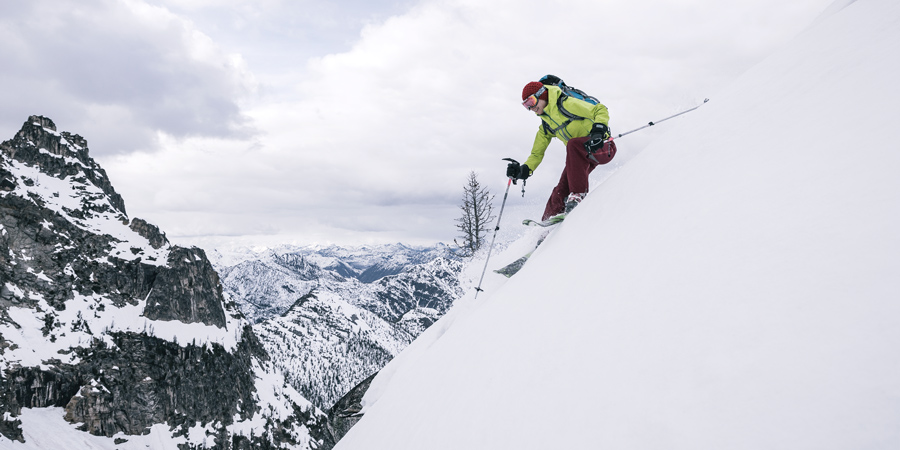
Backcountry ski touring has become increasingly popular over the past couple of years. It used to be limited to local die-hards who ate, slept, and breathed life in the mountains. Now, with increasing pollution in the Salt Lake valley, overcrowded resorts, and the overall push from society for more health and fitness, ski touring has become a lifestyle sport embraced by more people. The natural elements and length of adventure can make deciding what to bring for your day in the backcountry Skiing a nightmare – and honestly, I’ve learned this through trial by fire. So here’s a couple things that can help save you from the sweaty, freezing, and hungry occasions that could all very possibly happen in the same day!
How to Stay Safe when Touring
Before we even begin, it should be clear that nobody should ever head into the backcountry without at least taking a basic avalanche course. White Pine Touring offers free avalanche awareness seminars and AIARE Level 1-3 avalanche courses. Oftentimes there are also clinics put on by ski patrollers at your local resort. Even touring on flat terrain at the bottom of the mountains can put your life and others at risk. So get educated.
Backcountry Pack
To get organized, you’re going to need a reliable backcountry pack (Read more at shop Telemark pyrenees). It needs to have a place to store or attach a shovel, and I highly recommend that it has two body straps – one across your waist and one across your upper chest. Without both of these your pack will be slipping off your shoulders or flapping against your low back. If you want a pack that will meet your growing needs as a backcountry skier, the Ortovox Free Rider 24 ABS Backpack is a great, all-encompassing choice. It has dedicated safety gear and hydration compartments, a removable SPS spine protector, and to top it off, is ABS-compatible. The ABS (air bag system) deploys a large, pillow-like airbag from your pack when activated. This large airbag helps you stay on the snow’s surface during an avalanche and provides added protection for your head, back and neck.
AvaLung
Though air bag systems can seem a bit excessive for some minor backcountry excursions, having an AvaLung is not. The AvaLung system from Black Diamond works like a snorkel; it allows you to breathe the air readily available in the snowpack while expelling carbon dioxide away from your mouth so you don’t form an ice lens, which causes suffocation. In an avalanche situation, just a minute of extra oxygen can be the difference between life and death.
Shovel and Probe
Your pack should contain two main pieces of avalanche gear at all times: a shovel and a probe. A shovel should be durable, lightweight, collapsible, and contain a snow saw. Ortovox steps up to the plate again in avalanche gear to provide all of this with the Beast Saw Shovel. As for probes, look for ones that are sold separately from the shovel since the ones sold with a shovel are usually not long enough for realistic use. To be effective, a probe should be at least 240cm long, lightweight, and have a warranty of at least a year, such as the Black Diamond Quick draw 280cm Probe.
Beacon – Your Most Important Piece of Gear… Ever.
Your pack should not contain your beacon, because you should be wearing your beacon at all times. This sounds obvious but I’ve seen people, touring the mellow road through the gut of the mountains, wait to put their beacons on until they hit the “more dangerous” zone that they want to ski. This means they completely overlook the fact that the gulch was the most dangerous part of the tour. It’s a terrain trap. Choosing a beacon mostly boils down to your familiarity with that specific device. The Ortovox Zoom Recco Transceiver is both reliable and intuitive.
Protect your Noggin
Head injuries are the leading cause of trauma deaths in avalanches. If you get caught in a slide, you’re barreling down a mountainside with thousands of pounds of snow dragging you over rocks and into trees. Even if you don’t get caught in an avalanche, there are still hidden dangers that lurk under the surface of the snow. Wear a helmet.

 Ski Touring, Skimo, ski telemark, Ski alpine, Freeride Ski, Shop ski touring