
The waterproofing of a garment is an essential feature, especially in season when showers are quite likely. But you must certainly get lost between the notions of waterproofing and waterproofing and how they are evaluated. Here is a guide that will allow you to find your way around and understand everything in order to choose your next waterproof garment for your outdoor activities.
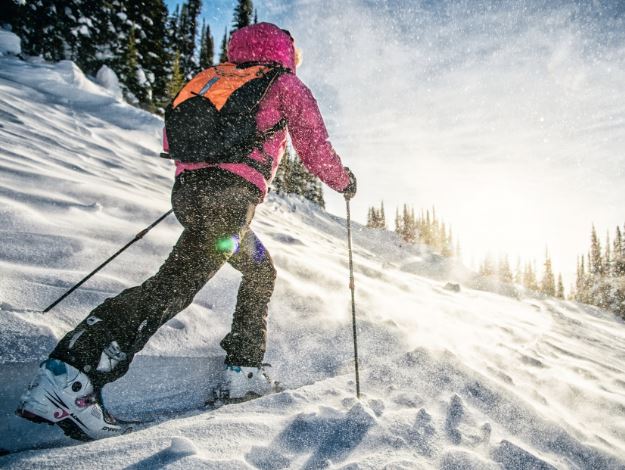
How does a garment become waterproof?
Before we understand how we measure the waterproofing of a garment, let’s pause for a moment on the waterproofing techniques most commonly used in the garment industry.
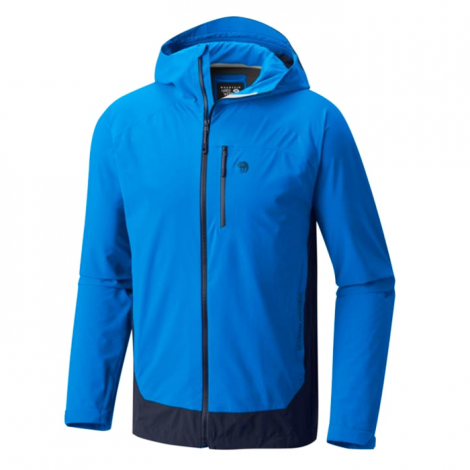
There are actually two different processes to make a fabric waterproof:
The coating
The inner surface of a tissue is coated with a layer of hydrophobic chemical (which repels water). Most coating garments are very economical but the flaw in this process is that most coatings quickly lose their waterproof properties.
The membrane technique
A membrane is when a protective film is associated with a fabric on its inner part. The big advantage of membranes is that they are flexible, more durable and more breathable. On the other hand, they are more fragile and can sometimes be punctured easily even though great progress has been made recently in proposing resistant membranes.
For regular use (as is the case with clothing) it will be better to produce membranes. In addition, their breathability will be a positive for a garment, which is also for a sporting activity. Shop your equipement ski touring at Telemark Pyrenees
What is waterproofing and how is it measured?
Waterproofing is simply the ability of a material, such as a fabric, to prevent the penetration of a liquid element, such as water.
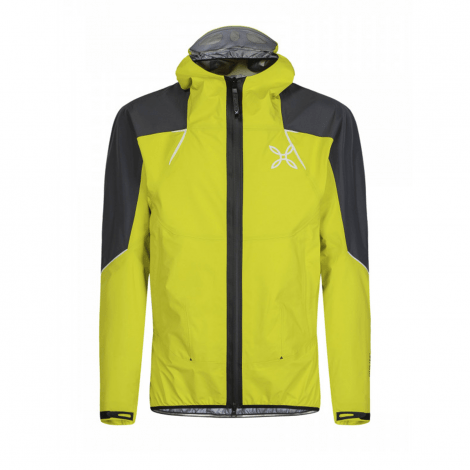
To measure the waterproofing level of a fabric, it is placed under a column or tube filled with water. The fabric is then subjected to the pressure of the water column, which is gradually increased.
It is then determined from what water height the first drops will pass through the fabric.
The unit used to measure waterproofing is called the Schmerber (1 Schmerber is equivalent to 1 1 mm column of water). A fabric with a value of 10,000 Schmerber can therefore withstand 10m of water.
Knowing that the average pressure of rainwater that falls is between 1,000 and 2,000 Schmerber, for a hike in light rain, choose a waterproof garment of at least 3,000 Schmerber while for a hike of several days opt for a more waterproof, especially if you leave for a destination with the risk of severe weather.
However, it is important to know that these laboratory experiments are somewhat different from the real conditions. For example, with the pressure of your backpack at the straps, there is pressure on your waterproof jacket, reducing the waterproofness of the garment membrane. This is the same as when you touch the wall of a tent.
This should be taken into account when choosing your jacket. In any case, the coating or membrane should allow perspiration to escape, but this element must prevent the passage of rainwater.
And use waterproof clothing?
It may be tempting to think that a totally waterproof garment will do the trick. this may be the case for a waxed garment or a waterproof poncho for dry hiking.
In fact a waterproof garment is not breathable at all. For a few minutes in the rain still passes, but for a hike of several hours or several days it is more annoying. You’ll be wet by your own sweatthat doesn’t drain and you’ll be more embarrassed than anything else.
These clothes are not recommended for hiking, and what’s more for any sporting activity.
An example of a waterproof jacket
This Eagle SKI jacket, with its Active Shell waterproof membrane, is fully lined net and all seams are thermo-welded. This product will give you great freedom of movement and at the same time for maximum protection against rain and wind with its membrane waterproof to 10,000mm of water and breathable at 10,000g/m2/24h.
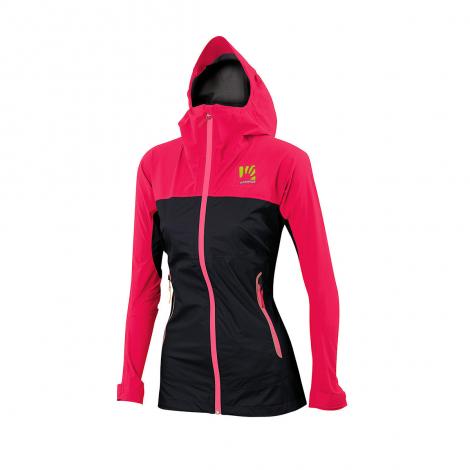
It will be perfect for sporting outings and its resistance to abrasion and tears is the guarantee of a great longevity.
An example of waterproof pants
These Quebec men’s pants are warm and feature a Softshell fabric with waterproof membrane that is waterproof to 10,000 mm of water, and a real breathability of 10,000 g/m2/24 hours.
Its Softshell fabric combines 3 layers: one of microfibre interior fabric for thermal insulation, a waterproof membrane and an ultra-resistant stretch fabric in the outer face to ensure good strength to these pants. With its denim aspect it is both cut for use in the city with a relaxed cut, and for more sporty use on hiking trails.
Read more about this article: How do you choose your alpine Touring Boots?

 Ski Touring, Skimo, ski telemark, Ski alpine, Freeride Ski, Shop ski touring